-
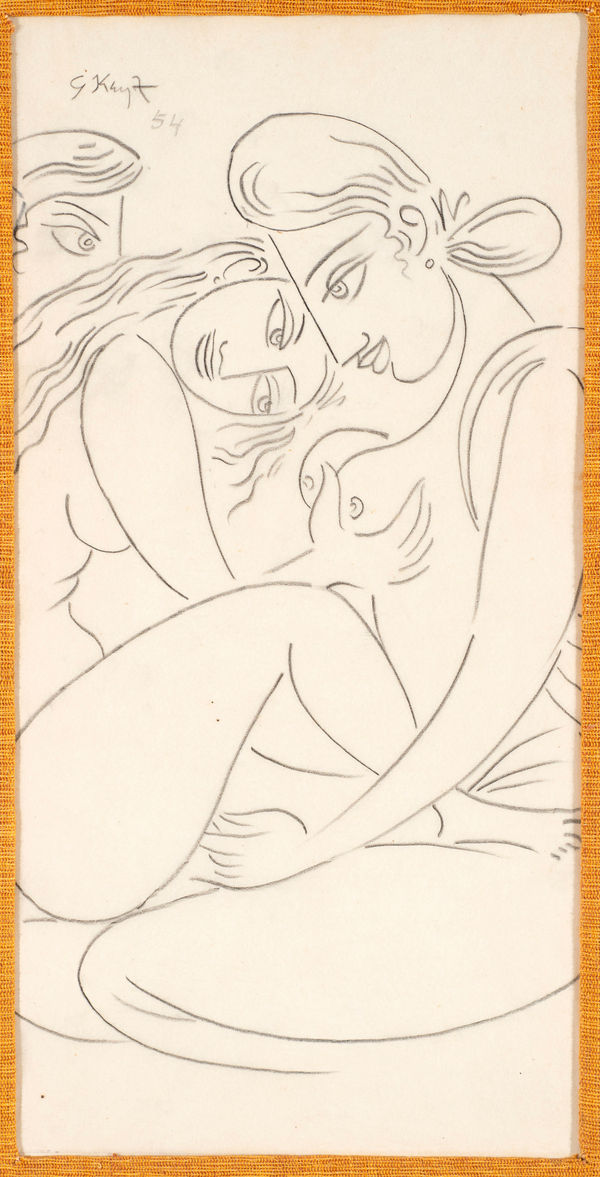
George Keyt (1901–1992) occupies a central place in Sri Lankan modern art, and his drawings form one of the most powerful and distinctive aspects of his creative output. Working primarily with line, Keyt developed a highly expressive drawing style characterised by rhythmic contours, simplified forms, and an emphasis on emotional and spiritual content rather than naturalistic detail. His drawings often depict figures from Buddhist Jataka tales, Hindu epics such as the Ramayana, and intimate scenes of everyday life. Through bold, continuous lines and carefully balanced compositions, Keyt transformed traditional South Asian themes into a modern visual language that was both deeply local and strikingly universal.
-
The Sapumal Foundation in Colombo is a charitable art institution established in 1974 by the Sri Lankan painter Harry Pieris to preserve, promote and make accessible Sri Lankan art and culture to the public. It is housed in Pieris’s former home on Barnes Place, where his personal art collection—especially works by members of the influential ’43 Group of modern artists including George Keyt, Ivan Peries and others
-
A major influence on Keyt’s drawing practice was his engagement with European modernism, particularly Cubism and the work of artists such as Picasso and Matisse. Rather than imitating Western styles, Keyt absorbed their structural experimentation and merged it with Asian aesthetics—temple murals, classical sculpture, and Kandyan painting traditions. His drawings frequently fragment the human figure into angular planes while maintaining a lyrical flow, creating images that feel at once ancient and modern. This synthesis allowed Keyt to challenge colonial-era artistic conventions in Sri Lanka, which had largely favored academic realism, and to demonstrate that modern art could emerge organically from indigenous cultural sources.
George Keyt’s importance as one of Sri Lanka’s foremost artists lies not only in his technical mastery but also in his role as a pioneer of modern Sri Lankan art. As a founding member of the influential ’43 Group, he helped redefine artistic practice in the country and opened pathways for future generations of artists to explore personal expression and cultural identity. His drawings, in particular, stand as enduring examples of how line alone can convey movement, spirituality, and emotional depth. Through his work, Keyt established a lasting artistic legacy that positioned Sri Lanka within broader global conversations on modern art while remaining firmly rooted in its own cultural heritage.
-

George Keyt, Untitled (Embrace) (1954): The Friday Find
Past viewing_room


